Cannabis laws are changing all over the world, and finally, some of us can legally grow our own ganja. Most experts will tell you that one of the most important keys to a successful cannabis crop is starting with good genetics. Unfortunately, learning the art of selecting seeds, germinating cannabis, and cloning plants can be a daunting task for beginners.
Let’s take a look at some of the basics so you can give your new cannabis cultivation hobby a great beginning.
Cannabis Seeds 101
Growing from seeds can be an incredibly rewarding experience. You’ll get to watch your cannabis plants develop from the embryonic stage all the way to harvest. You’ll feel an unmatched sense of pride when you partake of the first buds you grew from seed.
However, growing cannabis from seeds has both advantages and disadvantages.
Pros of growing from seeds
- Availability: Depending on where you live, clones might be hard to come by, but seeds are available online and can be shipped almost anywhere.
- Variety: Online seedbanks offer a nearly infinite selection of cannabis seeds.
- Breeding: If you’re feeling especially ambitious and don’t mind some seeds in your weed, you can cross different strains to create your own hybrids.
Cons of growing from seeds
- Pollination risk: Even with feminized seeds, you can’t completely guarantee that some of your plants won’t turn out male.
- More work: Germinating and caring for seedlings takes more effort than starting with clones.
- More time: You’ll need to spend several weeks getting your plants through the delicate germination and seedling stages.
Choosing Cannabis Seeds
Before we get into the different types, you need to know how to select healthy cannabis seeds that are likely to germinate and grow into strong plants. Viable seeds should be dark brown with light-colored stripes or mottled patterns. Cannabis seeds should feel hard if you squeeze them, but they shouldn’t be so brittle that they break.
If the seeds are squishy and white or light green, they’re immature and won’t germinate. The best way to ensure that you’re starting with hearty seeds is to source them from a reputable seed bank.
Feminized Seeds
Feminized seeds can save you the trouble of having to determine the sex of your plants. If you have males in your cannabis garden, they’ll pollinate the females, diminishing the cannabinoid content and filling your buds with seeds.
Make sure you buy feminized seeds from a reputable seed bank. Inferior feminized seeds have a tendency to turn into hermaphrodites. Hermaphrodite plants will release pollen, which can ruin your entire crop.
Auto-flowering Seeds
Instead of relying on light-cycle changes to begin the flowering stage, auto-flowering seeds will begin producing buds automatically when they reach a certain age.
Auto-flowering plants can be convenient for beginners. You won’t need to deal with changing the light cycle and switching bulbs for the flowering phase. Unfortunately, there aren’t many seed varieties available that are both auto-flowering and feminized.
With most auto-flowering seeds, you’ll probably have to sex your plants and discard the males. If you want to harvest strong sinsemilla, you need to identify the sex of your cannabis plants during the preflower stage.
Strains of Cannabis Seeds
It’s important to carefully select your cannabis strain for your first grow. You’ll want to consider certain factors, including:
- The effects you desire: In general, if you want a nighttime strain, choose indica-dominant seeds. Sativa-dominant strains will be a better choice for folks looking for a more energetic effect. You can also purchase high-CBD, hemp, or even CBG varieties.
- The demands of your climate: If you’re growing outdoors, you’ll need a strain that is compatible with your particular zone.
- How easy the strain is to grow: Beginners should choose a hearty strain that resists pests and diseases.
Germinating Cannabis Seeds
In order to germinate, cannabis seeds need warmth, moisture, and darkness. While there are many ways to germinate seeds, the most popular manner is the “paper towel method.”
- Put your seeds in a small glass of water and place them in a dark area like a cupboard.
- After around 12–24 hours, inspect your seeds. If they’ve sunk to the bottom, they’re ready for the next step. If they’re still floating, put them back in the dark for another day. Super hearty specimens may sprout right in the water, and you’ll be able to plant them immediately. Most seeds, however, will need to proceed to the next step.
- Fold a paper towel in half, and pour the water with your seeds into the middle. Mist the paper towel with water and fold it again to cover the seeds.
- Make sure that the paper towel is moist and place it inside a plastic freezer bag. Blow some air into the bag to create a dome and seal the zipper. Place the seeds back into your dark area.
- After 24 hours or so, check to see if the seeds have sprouted. If they’re ready, you can transfer them into your growing medium. If you see no signs of sprouting, mist the paper towel and repeat the process.
Planting cannabis seeds
Once your seeds have successfully sprouted, they’re ready to be transferred into small pots. Many growers use plastic cups with holes cut in the bottom for drainage.
You can use whatever medium you prefer, but I would recommend a good-quality garden soil (#ad) for your first grow. Using soil will naturally help keep essential nutrients in balance. You won’t need to worry so much about feeding your plants with expensive nutrient solutions or obsessing over the pH of the water.
Procedure for planting sprouted cannabis seeds:
- Wet the soil and place your finger in the middle to create a small hole about 1/4 inch deep.
- Place the seed in the hole with the tail side down and cover the seed with soil.
- Mist the soil with water and place the containers in a somewhat sunny location like a windowsill or under a low-heat grow light.
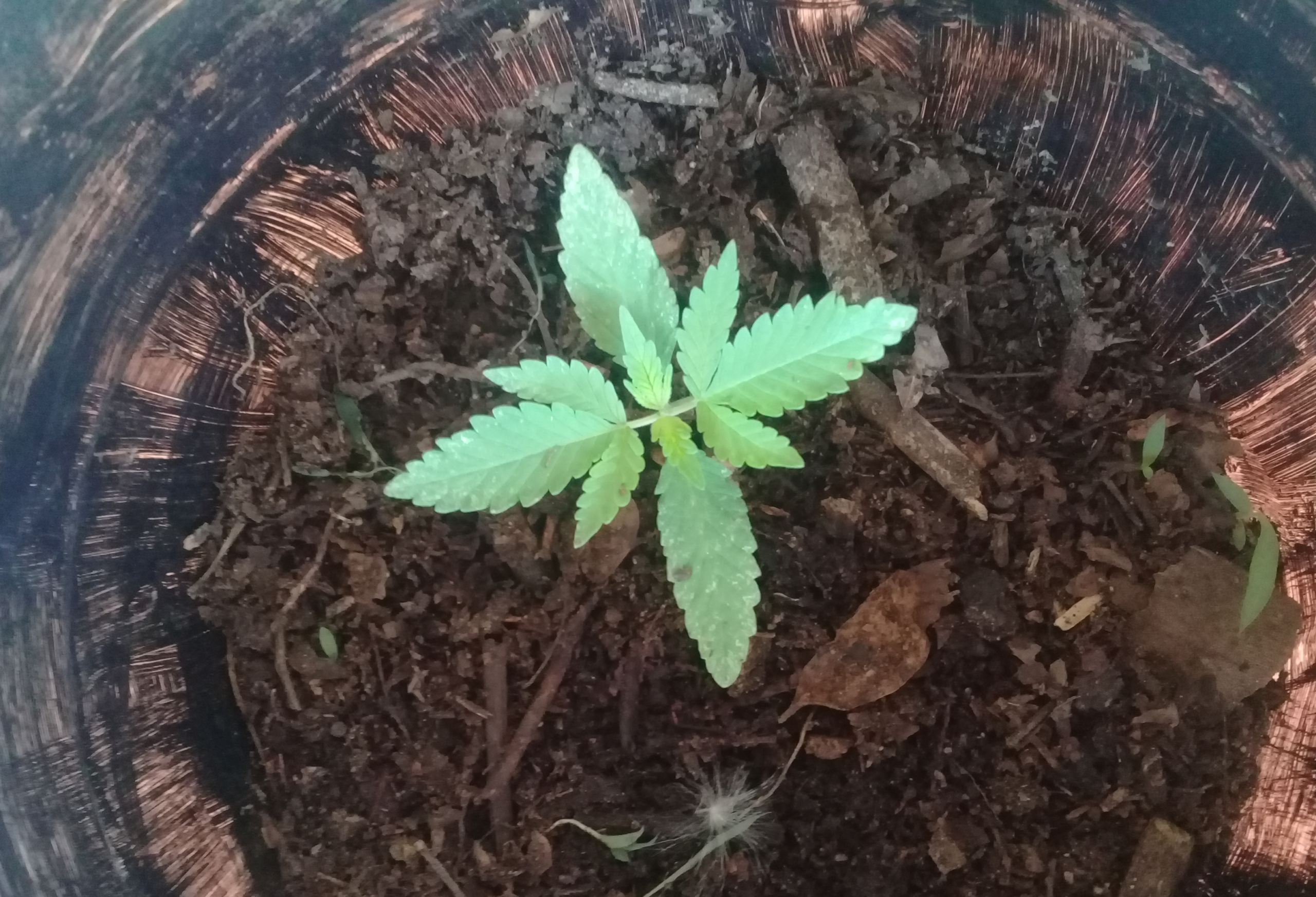
The tail that initially sprouts from your seed is the taproot, which will grow downward and start branching out. After establishing a rudimentary root system, the plant will shoot upward and sprout two round embryonic leaves or cotyledons. Next, two tiny serrated leaves will pop up in the center, and your plant will start looking more like cannabis.
Congratulations! Your herb has now entered the seedling stage.
Caring for Seedlings
Just like babies, seedlings need to be treated gently and monitored frequently. Extreme conditions will quickly mean the death of delicate cannabis seedlings.
Be careful not to overwater or overfeed your young plants. If you’re growing indoors, make sure you use the appropriate grow lights. Keep your seedlings at a safe distance from your light so you won’t accidentally burn them.
Growing Cannabis from Clones
I’ll admit, when I was younger I thought cloning cannabis was some far-out, high-tech concept. While cloning cannabis takes care, clones are simply what regular gardeners call cuttings.
Pros of growing cannabis from clones
- All females: Unlike seeds, clones from a mother plant will all turn out female.
- Save time: Growing from clones means skipping the lengthy germination and seedling stages, bringing you closer to harvest time.
- Hearty genetics: Established growers only choose the strongest and highest-quality specimens for mother plants.
Cons of growing cannabis from clones
- Limited selection: While you’ll have access to a seemingly endless variety of strains through online seed banks, your clone choices will be limited to strains you can obtain through local sources.
- No Autoflowering: It’s nearly impossible to successfully clone auto-flowering plants. If you’re growing outdoors, you’ll be stuck with the seasons to determine your flowering cycle.
- Harder to get: Depending on where you live, you could have a difficult time sourcing clones.
Cloning Cannabis
You can root clones by standing cuttings in a glass of water just like other plants in your garden. But if you’re investing time and effort in obtaining quality clones, you’ll want to make sure you have a high success rate.
For a step-by-step guide to cloning cannabis, check out our beginner’s guide to cloning cannabis.
Hopefully, you now have a better idea of the advantages and disadvantages of growing cannabis with seeds vs. clones. Good luck with your new grow venture!
This article features affiliate links. If you buy a product through any of the links in this post, we’ll receive a small commission at no cost to you. As an Amazon affiliate, I earn from qualifying purchases.
Written by Cat Winske
Photo by Tiffani Renee