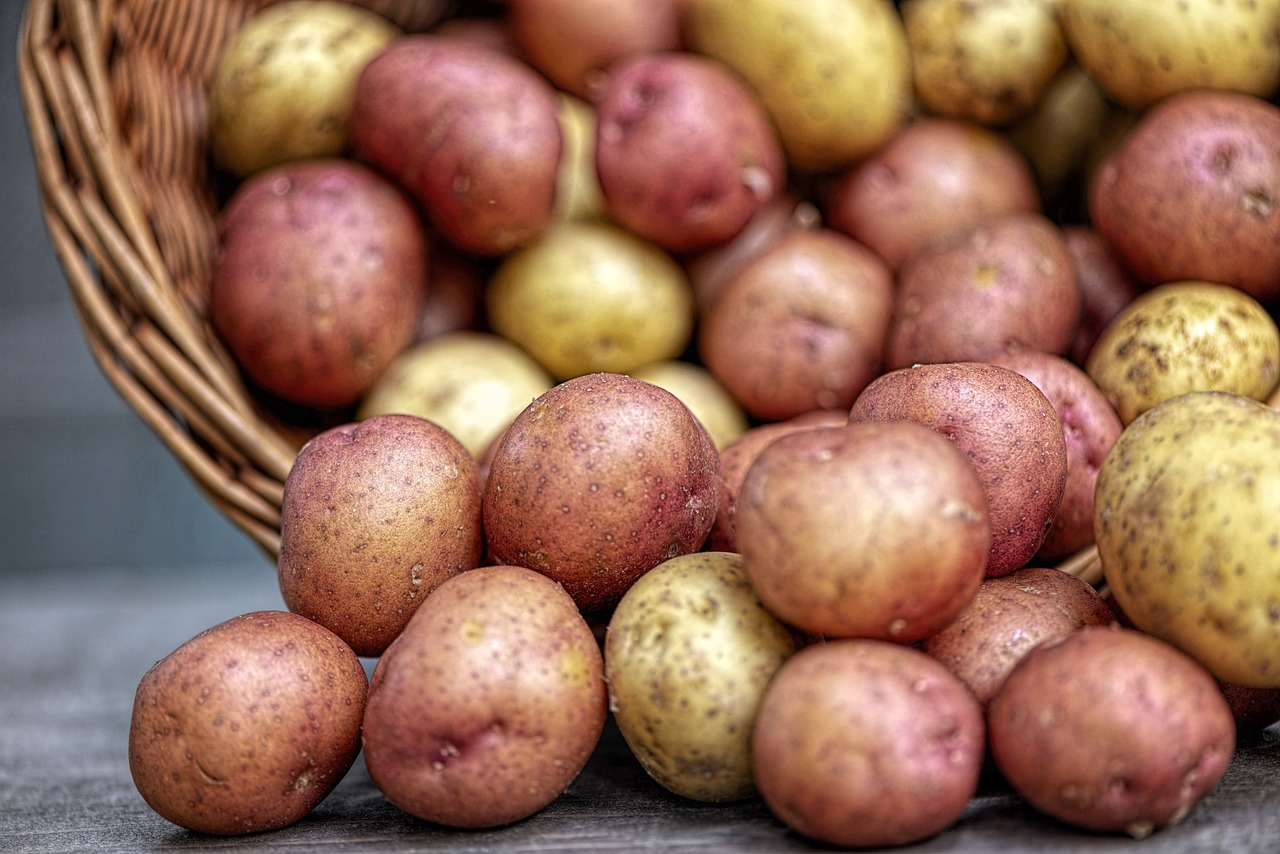
Potatoes are one of the easiest staple crops to cultivate, and almost everyone loves them. Besides being delicious, potatoes are rich in essential nutrients like vitamin C and potassium.
Potato Varieties
Potatoes belong to the botanical group Solanum tuberosum, and gardeners organize them into three primary types:
- New Potatoes (First Earlies): Gardeners plant New Potatoes in early spring. They grow to maturity within 80 days for a June or early July harvest. New potatoes have thin skin and tender flesh. It’s best to consume them within a few weeks as they aren’t suitable for long-term storage.
- Mid-season (Second Earlies): Planted in mid-spring, Second Earlies are ready in 80-100 days. Gardeners typically harvest them in mid-July or August and store them for up to one month.
- Late (Maincrop): Planted in August, Maincrop potatoes mature within 100-130 days. They are ready to harvest in late fall and can be stored for up to 3 months in suitable conditions. Maincrop potatoes are ideal for baking and roasting.
Both First and Second Earlies are perfect for container gardening as they grow fast and take up less space than late varieties. Alternatively, you can harvest early potatoes before planting another crop in the same garden bed.
Gardeners and cooks also classify potatoes according to texture.
Dry-fleshed (Mealy) potatoes are excellent for mashing, baking, or frying. Their texture allows them to absorb gravy, butter, sour cream, and other sauces well.
Waxy potatoes are typically moist and round. They tend to stay intact when cooked, making them ideal for salads, soups, and other dishes requiring potato chunks. While it’s possible to mash or puree waxy potatoes, they usually have an undesirable sticky texture.
Potatoes come in over a hundred varieties that differ in size, shape, color, and flavor.
Some of our posts contain affiliate links. As an Amazon affiliate, we earn from qualifying purchases at no extra cost to you.
Golden and Tan Potatoes
You’ll find an amazing variety of golden and tan potatoes on the market.
The texture of Yukon Gold potatoes ranges between waxy and mealy. Early-type Irish Cobbler varieties have an irregular shape and tan skins. They make tasty purees and mashed potatoes.
Gardeners typically plant Kennebec potatoes late in the season as they’re remarkably disease-resistant. Elbas are late varieties with tan skins. They easily resist diseases like blight and potato scab.
You may also want to try cultivating German Butterball and Russet potatoes.
Red Potatoes
Red potatoes are excellent for boiled dishes and salads.
Red Norland varieties are early-type potatoes with a subtly sweet flavor and deep red skin. They taste fantastic boiled and in salads.
Red Pontiac potatoes are mid-season varieties. They have deep eyes, making them especially easy to grow.
French Fingerlings make fantastic salads and thrive when planted late in the growing season.
Mountain Roses are early types with disease-resistant genetics, red skin, and pink flesh.
Chieftan and Red Lasoda are other delectable red potato varieties that taste yummy in salads.
Purple Spuds
Most blue and purple varieties do best when planted late in the season.
Adirondack Blue and Purple Majesties add color to your recipes with deep royal blue and purple hues.
Purple Viking potatoes are remarkably productive and belong to the early category.
Sweet Potatoes
Sweet potatoes and yams can be cultivated in much the same way as other types of potatoes. Try growing delicious Covington Sweet Potato or Japanese Murasaki varieties.
With all these options, you may want to grow them all. If you would like to plant several types of potatoes at once, you can purchase convenient seed potato mixes.
This post contains affiliate links. If you make a purchase through one of our links, we’ll earn a small commission at no cost to you.
How to Plant Potatoes
Potatoes like cooler climates and higher elevations. Europeans first discovered potatoes from the Incas, who lived high up in the Andes in Peru.
In most areas, you can sow potatoes up to a month before the last frost date in your region when daytime soil temperatures reach at least 55° F and 45° F at night).
Start with organic potatoes, as conventional farmers spray them with inhibitors to keep them from sprouting. You can also purchase “seed potatoes” from nurseries or online.
You can plant an entire potato or cut a potato into 1-2 inch sections, making sure that each piece has at least one “eye” or dimpled indentation. If you’re planting cut pieces in an area that stays relatively wet, you may want to treat them to prevent rotting. To harden the cut parts, simply place the potato pieces on a baking sheet.
If you’re dealing with smoother seed potatoes, you’ll be better off planting the entire tuber.
Some gardeners allow the potatoes to sprout before planting them. The process, called “chitting,” involves placing the spuds in a sunny area until they sprout. A tray placed near a windowsill indoors works well. It’s also possible to chit potatoes in egg cartons with the part with the most eyes facing upward.
In about a month to 6 weeks, your potatoes will have grown 1-2 centimeter shoots ready for planting.
Ideal Conditions for Growing Potatoes
Although potatoes require at least 6 hours of direct sunlight, they thrive in soil temperatures ranging from 45 to 55 F (7 to 13C). If you experience an unforeseen frost after planting, you can still remedy the situation. You can cover the shoots with pots, row cover fabric, or garden fleece. Another solution would be to rebury the shoots with warm soil.
For best results, choose well-drained, slightly acidic soil (pH 5.8 – 6.5).
Plant your spuds about 12 inches apart and 8-10 inches deep. Most gardeners add ½ inch of straw mulch to help retain moisture and deter weeds.
Potato Plant Care
Once your potatoes sprout through the soil, add more dirt and straw. You’ll see beginning sprouts after 1-2 weeks.
When the plants reach about 10” tall, add soil around the stem to create a mound. The technique is called “hilling” or “earthing up.” Hilling potatoes this way ensures that they get the depth and darkness that make tubers thrive.
Gardeners should hill plants in the early morning. Exposing the tubers to sunlight can cause them to turn green. The green color comes from the production of solanine, a chemical that makes them taste bitter and can be toxic.
If you’re gardening in a relatively small area, a container, or a raised bed, you may want to top off the area with soil, straw, or other organic matter instead of hilling.
Potato plants require at least an inch of water per week, and they like plenty of nutrients. You’ll want to add organic compost or compost tea at regular intervals.
Growing Potatoes in Containers
Potatoes are ideal for container gardening. Look for containers that are at least 20 inches in diameter. Specialized potato grow bags are ideal as they feature windows that will allow you to see how the growth is progressing beneath the soil.
Some gardeners use deep containers so that they can grow two or more layers of potatoes at once.
Pests and Diseases that Affect Potatoes
Scab is the most common disease that damages potato crops. The trick to preventing scab is ensuring that your plants stay consistently moist.
Blight (Phytophthora infestans) rears its ugly head after periods of warm, humid weather. This fungal disease produces dark patches that will quickly spread throughout your garden. If you suspect blight, remove all affected leaves and harvest your potatoes as soon as possible.
Beetles, aphids, leafhoppers, whiteflies, hornworms, and wireworms are the primary pests that affect potato plants. In certain regions, slugs may also cause problems, especially if you use dark plastic containers or coverings.
One of the most effective ways to prevent diseases and pest infestations is by practicing crop rotation. This involves waiting at least three years before planting potatoes or any of its nightshade family members (tomatoes, chilis, eggplants) in the same spot.
Harvesting Potatoes
Once the plants begin to flower, you’ll know that it’s almost harvest time. At this point, you can collect the most mature spuds and allow the others to mature. However, most gardeners prefer to harvest them all at once.
Once the plants show signs of dying, such as yellowing, it’s time to stop watering and prepare for the harvest. After letting the soil dry out, you can lift the entire mound or empty the container and collect the fruits of your labor. Be careful not to damage the potatoes with garden tools during harvest.
Keep in mind that potato plants may produce berries during cooler seasons. Although the berries look like tomatoes, they are toxic and inedible. The seeds inside the potato berries are also useless and won’t produce new potato plants.
Preparing Potatoes for Storage
Brush loose dirt off the potatoes, but don’t wash them! Instead, spread them out on a flat surface in the dark for around two weeks. This process cures the potatoes and will allow you to store them in a cool, dark area for a few months.
Baskets, cardboard boxes, and breathable sacks make suitable storage containers. Slightly humid areas with temperatures around 40 F make ideal storage conditions. If you don’t have a root cellar, you can put them in a closet, attic, cabinet, or garage. Add a humidifier or place pans of water in front of any air sources to keep your spuds from drying out.
You can also store your spuds in dark, perforated storage bags in the fridge. Potatoes should not be stored near apples. Apples emit ethylene gas, which causes potatoes to spoil.
So, there you have it. Now, you’re ready to grow one of the world’s most rewarding vegetables. Happy planting!
Written by Cat Winske
Image by stanbalik from Pixabay